Guide
Pack it right, insure it, and tell the carrier what it is
Applies to: All boards
Last updated: Sep 2026
Disclaimer: everything below is a set of tips based on what we've seen work, not a guarantee. JTSRF CLUB isn't responsible for damage or loss that happens in transit. It's on you to confirm packaging requirements, coverage, and claims policy directly with whoever's packing and shipping the board before it leaves your hands.
Quick facts
Standard shipping box
Box dimensions75 × 30 × 10 in
Packed weight~89 lb
HullCarbon fibre — fragile, high value
Corner padsAll edges of the box, always
ClosureStrapped, not just taped
The factory box
When JETSURF ships a new board, it arrives in a purpose-built box — sized and reinforced for exactly this shape. If you're shipping a used board and still have it, use it.
If you're reusing the original box:
- Replace any corner pads that are crushed, torn, or missing.
- Re-strap with 2–3 straps — don't rely on old tape.
- Check for water damage or soft spots at the corners. If it's compromised, don't trust it for another trip.
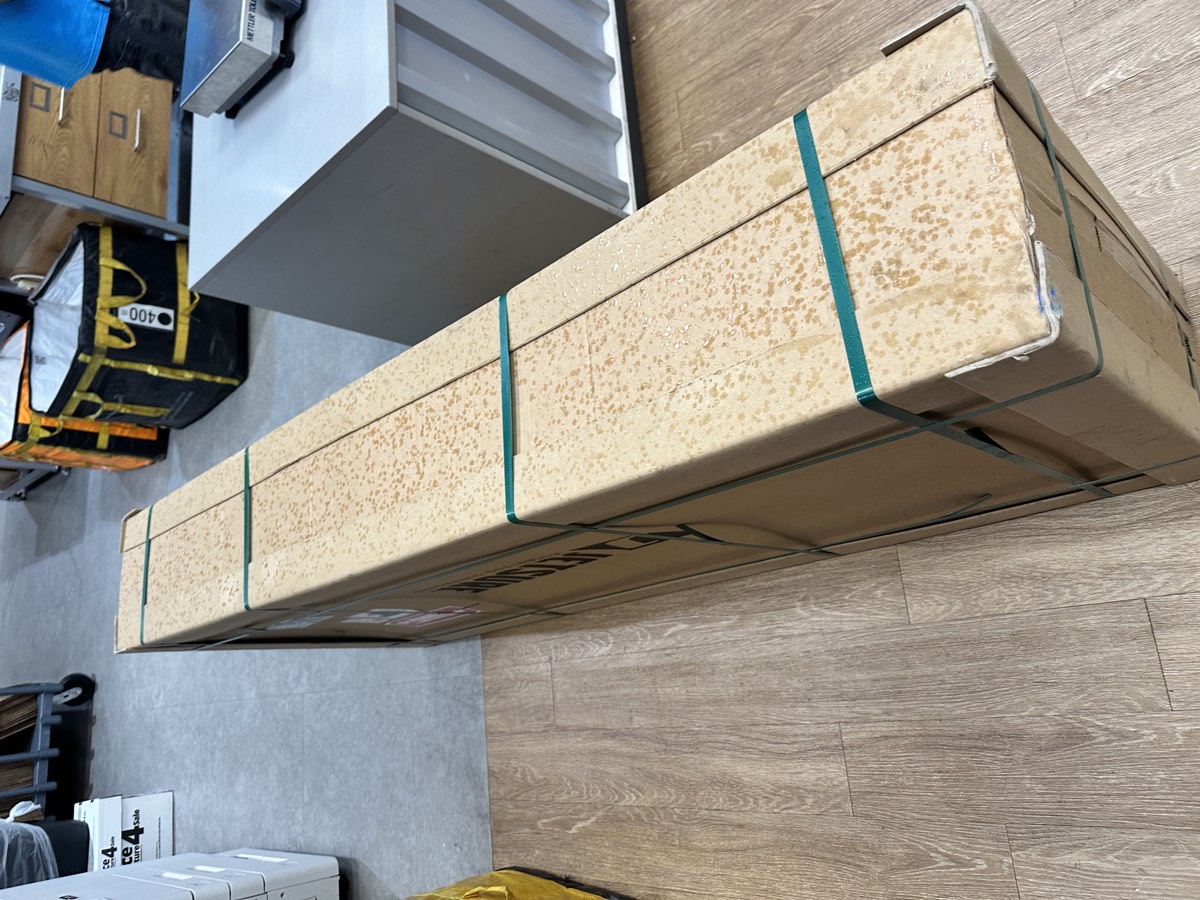
Straps run the length and across the box, not just around it — that's what keeps the corners from crushing in transit.
No original box? Four options, roughly in order
- Custom-order a box sized to the board. A packaging supplier builds or sells something close to 75″×30″×10″ — near factory-level protection without building anything yourself. Best on short notice, budget allowing.
- Build a wooden crate. Plywood sides, foam-lined interior, screwed shut — not just nailed. More labor, but the closest thing to bulletproof. Worth it for long-distance or international shipping.
- Build a box from heavy cardboard. Double-wall cardboard, reinforced corners, padded interior. A box with nothing inside it is not real protection at this weight — a fallback if you're out of time.
- Board-bag and pool-noodle method. No rigid box at all — foam and wrap, built by hand. Won't survive a serious drop like a crate would, but real cushioning at the edges. What most customers actually do.
The board-bag method, step by step
What we've actually seen work when there's no box at all:
- Slit standard pool noodles lengthwise so they open into a channel.
- Line them along the rails and edges of the board, inside the board bag — a continuous foam buffer where impact hits hardest.
- Pack bubble wrap inside the bag too, around the nose, tail, and any exposed hardware.
- Close up the bag, then add a second layer of pool noodles along the rails on the outside of the bag.
- Wrap the outside of the bag in bubble wrap as well, over the noodles.
- Stretch wrap the whole thing — multiple tight passes, until you can barely make out the bag underneath.
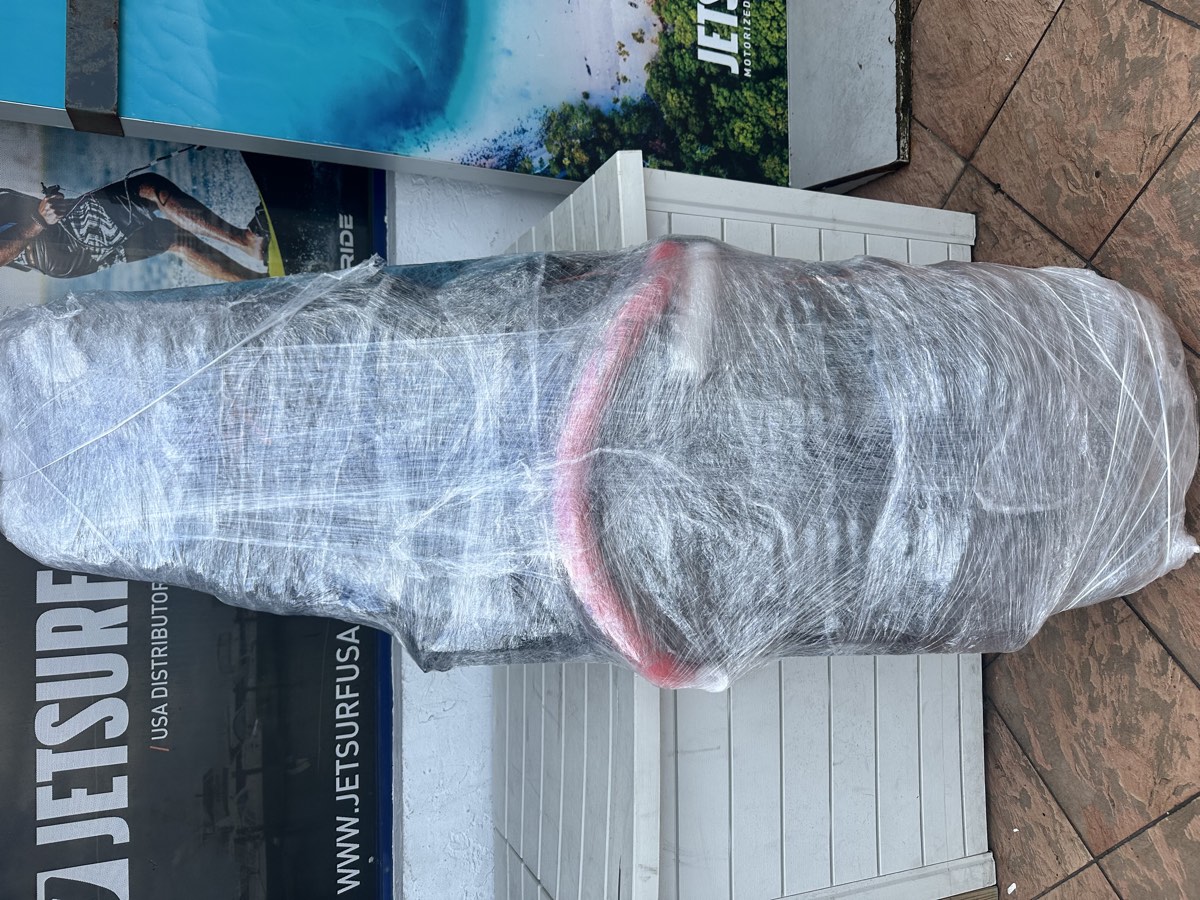
The pool-noodle rail (visible at the edge here) is what actually absorbs an impact — the stretch wrap on top just keeps everything from shifting.
Packing checklist
Applies no matter which of the four methods above you used.
- Rigid or foam protection at both ends — pads, crate foam, or pool noodles at minimum.
- "Fragile" stickers on at least 3–4 sides of the box, not just the top.
- "High value / handle with care" labeling in addition to fragile.
- Strapping in addition to tape — tape alone isn't enough at this size and weight.
- Fuel tank fully drained and vented before packing if shipping by air.
- Electric board batteries ship by ground only — no air carrier will take them, so plan the route accordingly.
Insurance — non-negotiable. We've had boards lost and boards arrive damaged. A carrier's standard liability coverage is usually a flat, small amount nowhere close to covering an actual board. Get the insurance in writing before the box leaves your hands — a quote, policy number, or line-item on the receipt, not a verbal "yeah, we'll cover that." Photograph the board and the fully packed box before it ships, timestamped — your best evidence for a claim. Hold onto the tracking number and all paperwork until the shipment is confirmed delivered and inspected.
Labeling & talking to the carrier
Getting the packing right doesn't help if the people handling the box don't know what it is.
- "FRAGILE" stickers on multiple sides — top, both long sides, and at least one end.
- Label it high-value too — the goal is "you'll be the one paying for this if it's damaged," not just "handle gently."
- Tell the shipping company directly what's inside and what it's worth — don't let them assume it's a normal package based on the box.
- Before you ship, ask what their claims process looks like: documentation required, timeline, full replacement vs. depreciated value.
- Choose the service tier built for oversized or freight items over standard parcel where you have a choice.
Tip: doing this up front — insurance in writing, photos, the right labels, a carrier who knows what's in the box — is what keeps a lost shipment from becoming a drawn-out fight later.
Quick reference
- Original box if you have it — pads fresh, re-strapped — or one of the four alternatives above.
- Fuel tank drained and vented if shipping by air.
- Electric board battery shipped by ground only — never by air.
- Fragile + high-value labels on multiple sides.
- Photos of the board and packed box, timestamped, before drop-off.
- Insured to full replacement value, confirmed in writing.
- Claims process confirmed with the carrier beforehand.
- Tracking number and paperwork saved until delivery is confirmed.
Working reference for board handoffs — not official JETSURF documentation.